Monday, October 31, 2016

Human Trafficking and Halloween: How to Stay Safe

Image result for stay safe on halloweenIf you love Halloween like us, you may be dressing up tonight and heading out of your house into the dark world of spooky happenings. Whether you're attending a smashing party, taking the whole family out for trick-or-treating, or just heading out with some friends to a haunted house, you won't be the only one seen in a cute or scary costume on this October eve.

However, with the trick-or-treat season comes lots of chances for those who want to hurt people to..well..hurt people. Kids, teens, and adults alike are heading out onto the streets in dark costumes; and so are the people who want to kidnap them. That's not to say every person you meet is going to snatch up your child, younger sibling, etc. and ship them off to a foreign country, but it does mean it's important to be cautious when you're out there. Here are 8 tips we've compiled to help you and/or your kids stay treat-filled and trick-free.

  1. Don't send your child to houses alone. This may seem like a given, but I recall begging my parents to let me go up to houses alone simply because it made me feel older. It's fun to feel like a big kid; but it's important to make sure those big kids stay safe. Unless they wan't to head up grandma's front walk by themselves; it's better to go with them, just to play it safe.
  2. Don't let your child go to a car on anywhere that isn't a house. This also seems like a given; but it's important. If someone is saying they're keeping their candy in their car, or "out back", don't let them go to get it. Most likely, there's no candy, and if there is, then that person should know better than to keep it anywhere except in plain sight. 
  3. Don't let your kid go inside the house; even if they say you can come in, too. I remember a family I used to go see who had their candy buckets laid out maze-style throughout their living room and dining room. As cute as it was, and as innocent as that family was; even with them letting my mom come with me, it could still be shady in bigger towns. If a person is inviting your child inside instead of just giving them a handful of candy, feel free to exit the situation. 
  4. This one applies to kids, teens, and adults: Don't stay and talk to anyone who pulls up to you in a vehicle. There are plenty of friendly people out driving on Halloween night. Maybe they're offering you a ride to that house or party because it's chilly outside and your costume doesn't look very warm. Maybe they're out looking at lights and want extra company. Regardless, unless you know them personally, don't stay and find out what someone who just pulled up to you in a vehicle wants. It isn't always a good thing. 
  5. Stay together. Don't let your kids run ahead of you, even to catch up with friends they see at another house. If you're in a group at a party, keep tabs on your friends and make sure that if you came together, you're leaving together. If you're haunted house hopping, make sure that you all share a ride and don't get caught up in the crowd of people doing the same thing. It's important to stay with your group and not get caught up in heading off by yourself; even if you are intrigued with something the rest of your group isn't. 
  6. Avoid shortcuts. It may be tempting to walk through someone's back yard if you know it will get you to your destination sooner, but it's better to stay where the streetlights are, and where the witnesses are. If you head off into the dark underbrush of your neighborhood, you could be at risk of meeting whoever else decided to hang out back there. 
  7. Don't trust people who continuously follow you. If you meet another group and decide to continue walking together, that's one thing. But if one person or just a couple people continuously follow you without your consent, get out of there. Their reason for following you can't be all that good if they won't tell you why. 
  8. Know what to do if you are grabbed; and teach children what they should do. Make sure your kids know that if a stranger does happen to grab them, to make a scene. They should know to make sure everyone in the immediate area can hear that this person is a stranger; and that they want to get back to their parents. Make sure they know to fight back as hard as they can and get the attention of any passersby. There should be passersby if you have followed my previous advice and stayed in the lit sidewalk area. If you're a teenager/adult, the best idea would be to yell "fire" to get other peoples' attention, as an adult yelling "help" doesn't have the same effect as a child yelling the same thing. Fight back as hard as you can if anyone grabs you, and, like I said before, stay in a well-lit area so there are a lot of witnesses if you are grabbed.
For further reading and to see other safety tips involving Halloween and even just abduction in general, click here or here.

Tuesday, October 25, 2016

Human Trafficking: What is Being Done?

Image result for human trafficking nonprofitsAlthough human trafficking is still a huge problem, there are lots and lots of organizations combating it. As well as those, which you can donate to, there are lots of hotlines you can call within your county, state, and even the national hotline. Today, rather than telling stories, we wanted to just compile a list of organizations you can join/donate to. To find your state's human trafficking hotline, click here.

Organizations

Monday, October 24, 2016

Human Rights and Human Trafficking

Image result for Modern Domestic ServantsAfter the United Nations was formed, several countries came together and decided on a few rights that were inherently given to all humans at birth. If you're not familiar with them, click here to be familiar with them.

Although every one of these rights has the potential to be violated, there are a few specific ones that are automatically violated if a situation can have the label of human trafficking on it.

The two I want to focus on for this story are the right to be free from slavery, and the right to work for pay and have humane working conditions. These rights are violated by domestic slavery, which occurs every day in the U.S. Most of the time we don't realize it; we think slavery is a thing of the past in our country, and some of the time the slave doesn't even realize it. Domestic slavery often begins as a promise for a household job, and ends with the domestic slave being forced to stay in the home and work long hours for little pay. Sometimes they are promised enough money to eventually move into their own home, but they never make enough to feed themselves and leave the home.

Here are a few stories I've collected which can allow us all to inform ourselves on this tragic reality:

Ima Matul, who was ecstatic when promised a $150/month nanny job in a household which spoke the same language she did. She soon realized the trap; the woman she was to work for took her passport, withheld all the money she earned working there, and threatened to turn her in for being an illegal migrant if she ran away from the home. 

Flor Molina, who became a victim of slavery in the garment industry in Los Angeles.

Shiyma, who lived as a domestic servant in the wealthy Northwood district of Irvine, California. Shiyma lived a tragically real Cinderella story. 

Kika Cerpa, who, promised a job as a nanny in the U.S. at 14, was really sent there to be a sex slave. 

A look inside legal slavery within our prison system (yes, this type of slavery is exactly the same. Even incarcerated individuals should, according to the UN, be exempt from any form of slavery, and yet in our American constitution it is legal for prisoners to be slaves) 

Friday, October 21, 2016

Trafficking Victims: What Puts Someone at Risk?

I want to give a short disclaimer before I begin this article: NEVER BLAME THE VICTIM. Even if someone does possess qualities that put them at risk to be trafficked, it's not their fault someone else decided to take advantage of them. 
Image result for human trafficking victims
So, what exactly are these qualities? Trafficking happens to everyone in every area of the world of any social class, so there can't possibly be things in common, right? 
Actually, there are a few things you can point to from victim to victim and say "that put them at risk", even though it seems difficult to do so. 

Safe Supportive Learning's website tells us that the factors generally include the following:
  • lack of personal safety
  • isolation
  • emotional distress
  • homelessness
  • poverty
  • family dysfunction
  • substance abuse
  • mental illness
  • learning disabilities
  • developmental delay
  • childhood sexual abuse
  • promotion of sexual exploitation by family members or peers
  • lack of social support
If a child grows up in a household that locks them out at night, or is strict enough to keep them from having friends, or possibly with parents that emotionally/mentally abuse them, they are at risk. 
If a child is kicked out at a young age by their parents and have a hard time making it without being old enough to have a job, possibly turning to selling drugs just to pay for food, they are at risk. 
If a child has a disability that could make them naive to risky behavior of those around them, they are at risk. 
If a child grew up in a household where they were sexually abused, or possibly even trafficked by their parents/family members, they are (obviously) also at risk. 

It's so important to be supportive of those around you; because it's rare that the child growing up in a broken household will be willing to announce it to people they hardly know. Sometimes victims are embarrassed to admit their situation, seeing themselves as weak, especially if they're already being trafficked. They can't imagine how they could have allowed themselves to be taken advantage of. 

Thursday, October 20, 2016

Who are the Victims of Human Trafficking?

In our last post, we discussed the sad truth that human trafficking is a problem in small villages, large cities, and even in your own home town. It's not that it could potentially be an issue. It's happening, and it happens every day in every area of the world; even the lightest-populated areas can be targeted. Today, we wanted to delve a little deeper; stories from our own state, Illinois.

Image result for illinois human trafficking

An article was brought to my attention this morning, posted April 2, 2016 by the State-Journal Register, telling the story of Patricia McKnight, who grew up in Freeburg, Illinois, and found herself to be the victim of the sex trafficking industry. These stories aren't uncommon, and they're fully preventable if we all came together to stop them before they take place.
Saving women after they've been shut up in small, inconspicuous apartments, or hotels, or the back rooms of businesses is better than nothing, but it isn't enough. We need to prevent these situations before the women ever leave safety; and if they're born into danger, as Patricia was, with an abusive stepfather and a mother who felt he was her only option for financial stability, they need to be removed and placed into a place of comfort as soon as they can be.
To read more about Patricia and the Butterfly Dreams Abuse Recovery, which she herself founded, click here. 

Wednesday, October 19, 2016

Where does Human Trafficking Happen?

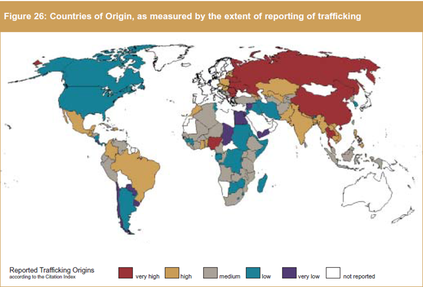
So, we know what human trafficking is, and we know that it should be stopped. Now the question is: where does it happen? Where do we need to be the most wary of it?
                                                               
Image result for human trafficking map


The answer to that turns out not to be as simple as you'd think. Generally speaking, people tend to believe trafficking only happens in poor areas or third world countries. The truth is, it can happen to anyone, anywhere, at any time, including in the richest parts of the United States. All it takes is one unlucky person and a trafficker to manipulate them.


Don't just take our word for it. Here we've collected stories from several different countries you can read at your leisure and see just how widespread this problem truly is.

Karla, who, coming from an abusive family, was persuaded to follow a 22 year old man when she was only 12 into what she believed to be a new, happier life, and turned into a first-hand experience in the sex trafficking industry (Mexico City)

Anya, who, promised a job as a waitress in Europe, was trafficked to Ireland

Shandra, who, during the financial crisis, lost her job in Indonesia, was then promised a job in Chicago, a city which she was repeatedly promised she'd have a job in if she came to the U.S. and yet never got to see during her time as a slave.

Jennifer, who, growing up in Columbus Ohio, found herself also being the property of several pimps there, each tattooing their name or symbol on her skin.

Sadly, these are only a few of the millions of stories from men, women, and children of all ages throughout every part of the world. Even in Effingham, where our highschool is located, trafficking is a problem. Most people know someone who has almost been coerced into the trafficking industry; something as innocent-sounding as a modeling gig can be a part of something much larger and much more evil.
Stay safe out there.